
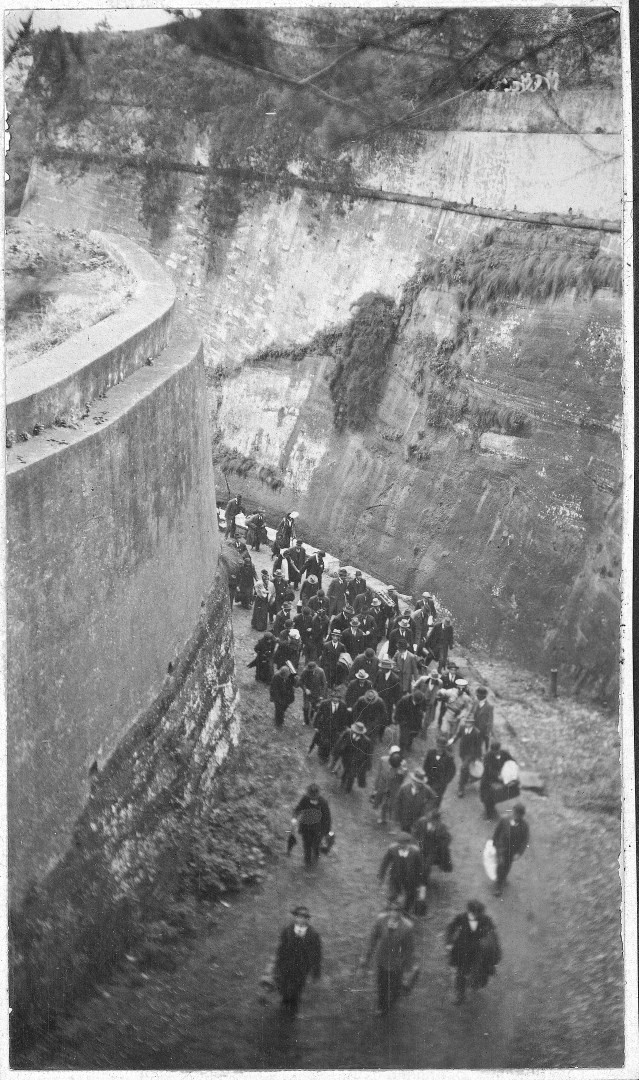
Alemães a chegar a fortaleza de São João Baptista, Angra do Heroísmo.
Impressão em papel de MAHI201609330. Coleção do Museu de Angra do Heroísmo.
This page aims to present the history of the DCA (Depósito de Concentrados Alemães), located in the Forte de São João Batista on the island of Terceira in the Azores archipelago.
Between 1916 and 1919, a total of 763 civilian prisoners of German, Austrian, and Hungarian nationality passed through this depot, following Germany’s declaration of war on Portugal on 9 March 1916.
Under pressure from the British government, Portugal abandoned its neutrality in the First World War on 23 February 1916, seizing 72 German and two Austrian ships located in Lisbon and other colonial ports. In addition to the crews and passengers of these vessels, nationals of those countries of military age, residing in Portugal and its colonies, were also interned in camps established for this purpose.
Depósitos de Concentrados, or internment camps, were established in Angra do Heroísmo (Azores), Peniche and Caldas da Rainha (mainland Portugal), as well as in the overseas colonies, namely Angola, Mozambique (Lourenço Marques and Macequece), Guinea, and Goa (Bicholim, Aguada, and Pangim).
Detention continued for nearly a year after the end of the war, pending the resolutions of the Treaty of Versailles. The detainees held in the DCA were finally released in October 1919. A place of death for some and of life for others, the Depósito de Concentrados Alemães in Angra do Heroísmo reflected its era and the challenges faced by the young First Republic. It was conducted in accordance with the Geneva Conventions, leaving to this day a positive impression of how the country and the Portuguese Army treated its prisoners.
It is therefore our duty to preserve the memory of this historical event by promoting it at regional, national, and international levels, while also seeking to establish contact with the descendants of the prisoners of war, as well as those of the military personnel and the civilian population of Terceira who lived alongside them, both within and beyond the DCA.
More than ever, it is vital to chart paths of concord through mutual understanding and constructive dialogue, capable of nurturing hope for a future in which the hatred that fuels war gives way to the peace we all desire and deserve
———————————————————————————————
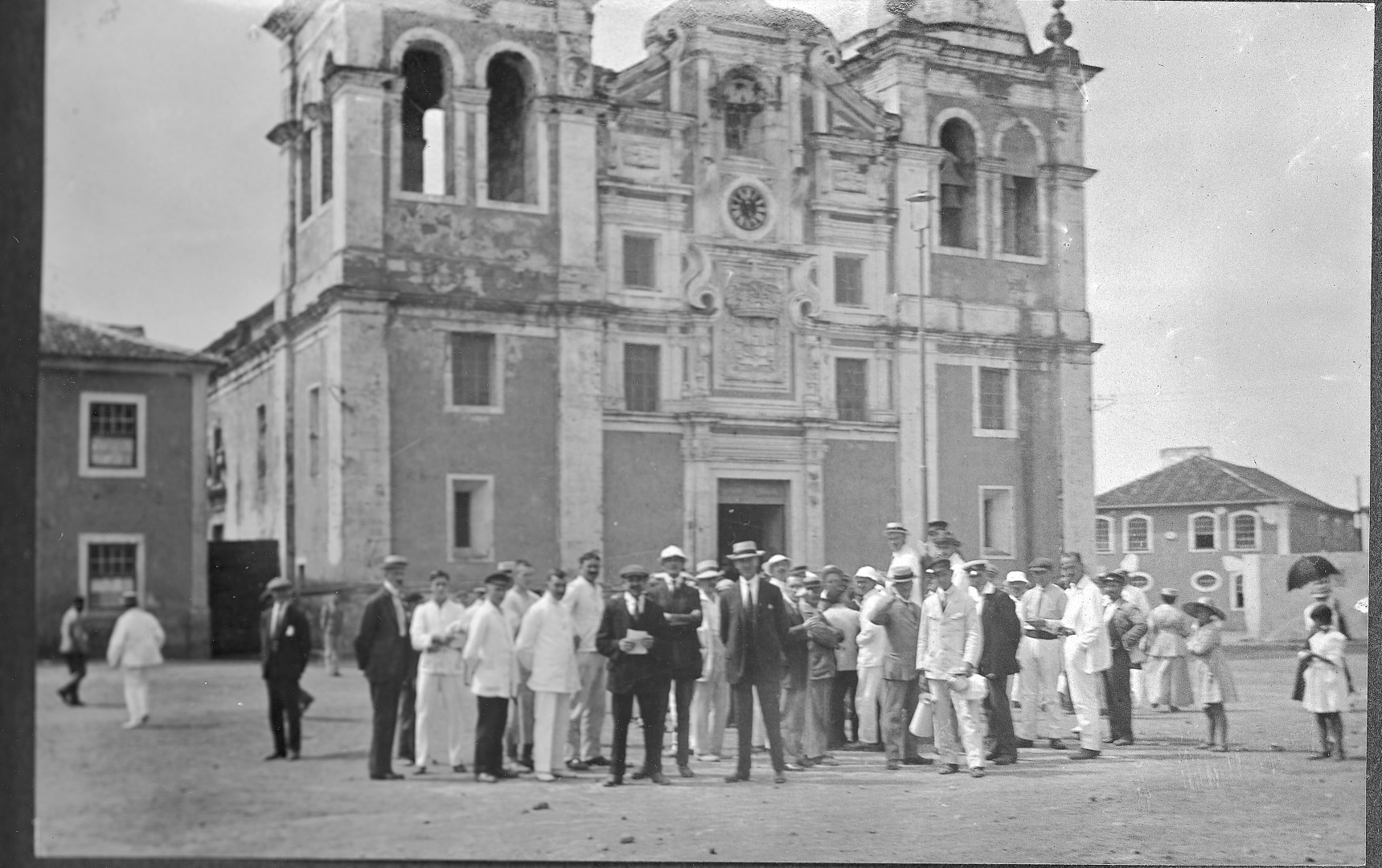
Alemães em frente da Igreja da fortaleza de São João de Batista (Angra do Heroísmo).
Impressão em papel de MAHI201610060. Coleção do Museu de Angra do Heroísmo.